Asset/Stock tracking software
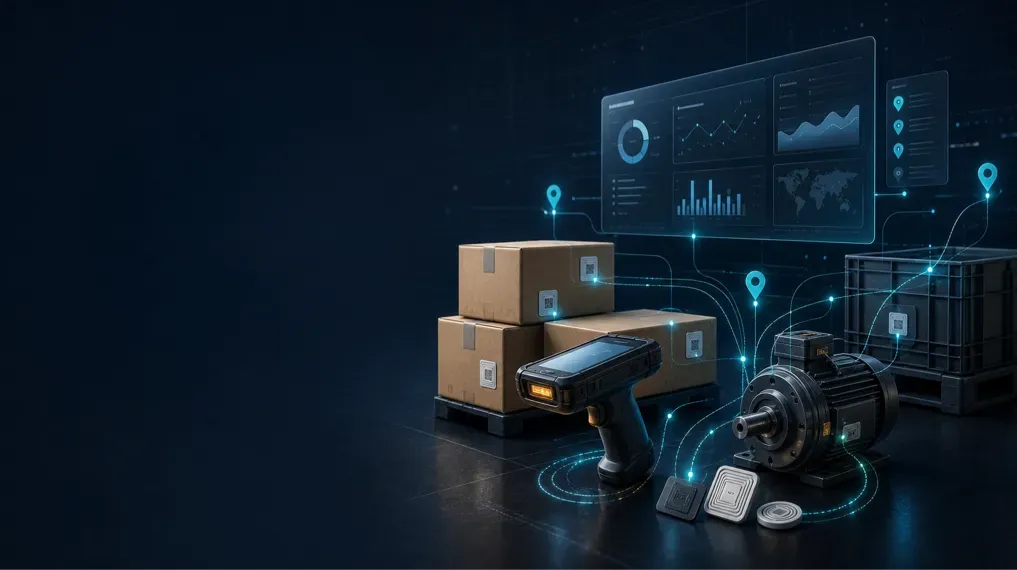
Asset and stock tracking, custom built around your processes
Contact MeI build custom RFID and barcode inventory tracking systems for businesses that need faster, more accurate ways to identify, count, locate and manage stock or assets, and I build them from the reader up, not just the database down.I build custom RFID and barcode inventory tracking systems for businesses that need faster, more accurate ways to identify, count, locate and manage stock or assets, and I build them from the reader up, not just the database down.
Most inventory problems are not really software problems. They are read problems, tag selection problems, process problems or "the handheld lost Wi-Fi in warehouse" problems.
I have spent years working on both sides, writing the code that talks to readers, and building the apps, APIs and dashboards that turn those reads into something your team can act on.
Whether you work in warehousing, logistics, manufacturing, retail, field services, rental or fixed asset management, I can design software that ties RFID readers, mobile computers, fixed portals and your backend systems into one workflow.
Choosing the right technology before writing any code
RFID is not always the right answer, and I can help determine if it is for you.
A barcode process may be cheaper, more forgiving and adequate for a lot of operations. Where RFID performs is bulk reads, hands free scanning, and locating things nobody has time to search for manually.
- UHF • 10 metres of read range, hundreds of tags per second, good for pallets, cartons, tools, hardware and stock. In Australia this runs in the 918–926 MHz band, which matters when you are sourcing tags and readers from overseas suppliers.
- NFC • short range, read one thing at a time. Good for asset check-in/check-out, inspection points, tap-to-log workflows and anywhere a phone should be the reader.
- Barcode (1D/2D) • still the most cost effective option for high accuracy, one item at a time, and often the right fallback layer inside an RFID system.
- Hybrid • in practice, most systems end up mixed. RFID for bulk scanning, barcode for exceptions, NFC for people and equipment.
Tag selection matters as much as the reader. Metal can make an ordinary label useless, so racks may need anti-metal tags. Tag placement, orientation and the material behind it will change your read rates more than any line of code. I help test this before committing to a project.
Hardware I've used in production
- Zebra ATR7000 • beam-steering fixed reader with real positioning, not just presence detection
- Zebra FX-series fixed readers over LLRP, plus legacy Zebra/Motorola mobile computers such as the MC9090 and MC9190
- Chainway handhelds and wearables • C72, C66, R5 and MR20, including their Android UHF SDKs and Bluetooth reader integration
- Chainway URA4/8 fixed Android RFID reader for portal workflows
- Android industrial handhelds • hardware trigger mapping, glove friendly UI, sunlight readable screens, battery aware scanning
- iOS and iPadOS with Swift and SwiftUI, including Bluetooth sled and wearable reader pairing
- Embedded platforms • Raspberry Pi, Arduino, ESP32 • for sensors, indicators and custom edge devices
Full-stack
- Device integration and reader communication • vendor SDKs, LLRP, serial and BLE
- Native Android and iOS apps for handhelds, phones, tablets and wearables
- Edge services running on fixed readers or local hardware so a network outage doesn't stop the process
- Backend APIs, databases, event processing and audit trails
- Web dashboards, live movement views, exception reporting and alerts
- Integration with your existing ERP, WMS or inventory platform
- Deployment and fleet management • device enrolment, kiosk/lockdown configuration, staged rollout and update strategy
I work with prototypes, MVPs and production systems, depending on where you are in the process.
Case Study
Automated Weighbridge System
This project replaced a fragmented weighbridge process with a guided workflow for office staff, weighbridge operators and drivers. Staff can assign tractors to the correct almond batch and route from the web platform, while the weighbridge controller Android app and fixed RFID scanner recognises vehicles through RFID and captures stable scale readings from connected weight bridge scales at the lane.
How I work
Most engagements start with a short discovery and a site assessment: what you're tracking, what the environment is made of, how items move, what your current failure points are, and what the data has to line up with at the end of the month. From there I recommend a technical approach that will do the job.
Then it's build, test in your environment rather than only on a bench, deploy in stages, and support it afterwards. You work directly with me throughout. There is no account manager relaying requirements to an offshore team, and no handover to someone who has never seen your warehouse.
If you need inventory or asset tracking software built by someone who understands the hardware as well as the software, get in touch. Tell me what you're tracking and where it goes wrong today, and I'll give you an honest assessment of what I can do to help improve your processes.
Based in Brisbane, working with clients across Australia and internationally.